
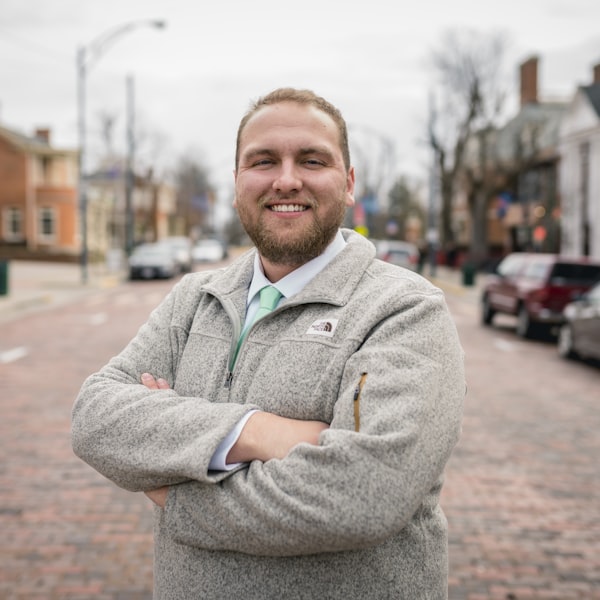
How a Weekend Runner Qualified for Boston at 42
Daniel Kessler ran his first marathon in 2022 at age 39. He finished in 4:12:33, cramping at mile 22, walking the final two miles, and vowing never to do it again. Three years later, at the California International Marathon in Sacramento, he crossed the finish line in 3:05:17 — thirty-seven seconds under the Boston Athletic Association qualifying standard for men aged 40-44. He was forty-two years old, working full-time as a civil engineer, and training entirely on his own with no coach, no running club, and no college running background.
His story is not about exceptional talent. It is about what happens when a recreational athlete treats training as a systematic problem to solve rather than a willpower contest to endure. The specific decisions he made — about volume, intensity distribution, race selection, fueling, and the mental framework for handling failure — offer a practical blueprint for the thousands of recreational runners who attempt to qualify for Boston each year and fall short.
The Starting Point: 4:12 and No Plan
Kessler's first marathon, the 2022 Los Angeles Marathon, followed the training approach that most first-time marathoners adopt: a 16-week plan downloaded from the internet, built around three runs per week with a long run on weekends that progressively increased to 20 miles. He did no speed work, no tempo runs, and no strength training. His weekly mileage peaked at 38 miles in week 14 and averaged 28 miles per week across the training block.
The result was predictable. His aerobic base was insufficient to sustain the effort required for 26.2 miles at anything resembling a competitive pace. He went out at 8:45 per mile — a pace that felt comfortable at mile 5 — and began to deteriorate by mile 16. The final 10 miles took him nearly two hours, and the muscle cramping that began at mile 22 reduced his running to a walk-jog shuffle for the last three miles.
"I thought marathon training was about surviving the distance," he said. "I trained to survive. So that's exactly what I did — I survived. It was miserable."
Year One: Building the Base (2023)
After six months away from running, Kessler began reading about marathon training with the same analytical approach he applied to engineering problems. He found his way to Jack Daniels' Daniels' Running Formula, Arthur Lydiard's periodization model, and the training logs of runners who had successfully qualified for Boston in their 40s. The pattern he identified across these sources was consistent: higher weekly mileage, structured intensity distribution, and periodized training blocks rather than a single 16-week buildup.
In 2023, he ran no marathon. Instead, he spent the year building his aerobic base. His weekly mileage climbed gradually: 25 miles per week in January, 30 in March, 35 in May, 40 in August, and a peak of 48 miles per week in October. He ran five days per week, with four easy runs and one longer run of 12-16 miles. His easy pace was genuinely easy — 9:30 to 10:00 per mile, slow enough that he could hold a full conversation without breathing through his mouth.
This was the hardest year, not because the training was physically demanding but because it required discipline to run slowly. Running at 9:45 per mile felt embarrassingly slow. Other runners passed him on the trail. His GPS watch showed paces that seemed inconsistent with serious training. But he trusted the process because the physiology was clear: easy running develops mitochondrial density, capillary networks, and cardiac stroke volume — the aerobic infrastructure that determines how fast you can run without accumulating lactate. You cannot shortcut this adaptation by running faster. You can only build it by accumulating volume at low intensity over months and years.
By December 2023, his resting heart rate had dropped from 62 to 51 beats per minute. His easy pace at the same heart rate had improved from 10:00 per mile to 8:50. He had not done a single speed workout, but his aerobic system had transformed.

Year Two: The First Real Attempt — and Failure
In 2024, Kessler introduced structured speed work for the first time. He followed an 80/20 intensity distribution — 80% of his weekly mileage at easy effort, 20% at moderate or hard effort. His weekly structure became: Monday easy, Tuesday intervals or tempo, Wednesday easy, Thursday easy, Friday off, Saturday long run with race-pace segments, Sunday easy or cross-training.
His interval sessions started conservatively: 4 x 800 meters at 5K pace (6:40 per mile) with 400-meter recovery jogs. Over 16 weeks, these progressed to 6 x 1000 meters at threshold pace (7:00 per mile) and 3 x 2-mile repeats at half-marathon pace (7:15 per mile). His weekly mileage settled between 45 and 55 miles, with peak weeks reaching 60.
He entered the October 2024 Chicago Marathon targeting a 3:15 finish — the BQ standard for his age group at the time was 3:10, and he wanted to run 3:05 to build in the buffer that Boston's rolling qualifying system effectively requires. His training predicted a 3:08-3:12 marathon based on recent race results (a 1:28 half marathon, a 38:40 10K).
He finished in 3:22:04. The race started in 74°F heat with 80% humidity — conditions that degrade marathon performance by 3-5% for most runners. He cramped at mile 20, lost his pacing group, and spent the final 10K running alone in a dissociative haze. The time was a 50-minute improvement over his first marathon, but it was 12 minutes outside qualifying range.
"Chicago taught me that fitness is necessary but not sufficient," he said. "You also need the right race, the right conditions, and the right fueling strategy. I had the fitness. I had nothing else."
Year Three: The Systematic Approach
The 2024-2025 training cycle was where Kessler's engineering mindset produced its biggest returns. He made three specific changes based on the Chicago failure.
Race selection. He chose the California International Marathon (CIM) in Sacramento, held in early December. CIM is widely regarded as one of the fastest marathon courses in the United States — it is a point-to-point, net-downhill course (340 feet of elevation loss) with December morning temperatures typically between 38°F and 48°F. The course attracts a disproportionate number of Boston qualifiers because the combination of downhill terrain and cool weather creates ideal marathon conditions. Kessler had run Chicago in October heat because it was a famous race. He chose CIM because it was a fast course. The distinction is significant for anyone chasing a qualifying time.
Fueling. He practiced his race-day nutrition during every long run for 16 consecutive weeks. His protocol: a gel every 35 minutes starting at mile 3, supplemented with electrolyte drink at every other aid station. He tested five gel brands during training to identify which one his stomach tolerated at race pace and settled on a caffeinated maltodextrin-fructose blend. By race day, his fueling strategy was automatic — he had executed it 16 times in training and knew exactly when and how his body would respond to each intake.
Pacing discipline. He hired a pacing calculator, not a coach. Using his recent race times (a 1:26:12 half marathon in September, a 37:58 10K in October), he calculated his predicted marathon time as 3:03-3:07. He set his goal pace at 7:04 per mile — a 3:05:15 finish, leaving 35 seconds of buffer against the BQ standard. He programmed his watch to alert him if his pace dropped below 6:58 or above 7:10. The ceiling was as important as the floor: running too fast in the first half is the single most common reason recreational runners blow up in the second half of a marathon.
Race Day: 3:05:17
The California International Marathon on December 7, 2025, started at 7:00 AM with temperatures at 42°F and clear skies. Kessler lined up in the B corral with approximately 400 other runners targeting sub-3:10 finishes. His first mile split was 7:06 — two seconds slower than goal pace, exactly where he wanted to be.
Miles 1 through 13.1 averaged 7:05 per mile. His first-half split was 1:32:28 — within 15 seconds of his target. The downhill sections through Fair Oaks and Carmichael kept his effort level stable even as the pace dipped slightly faster on the descents. He took a gel at miles 3, 6.5, 10, 13.5, 17, 20, and 23 — the same schedule he had practiced in training. His heart rate stayed between 158 and 164 beats per minute through the half, well below his lactate threshold of 172.
Miles 14 through 20 were the critical section. The course flattens in this stretch, and the mental grind of maintaining pace without gravity's assistance is where most runners begin to slow. Kessler's pace held at 7:04-7:08 through mile 20. His heart rate climbed to 168, but he had trained at this effort level during his long runs with race-pace segments — it was uncomfortable but sustainable.
Miles 21 through 26.2 were where everything he had built over three years paid dividends. His pace slowed to 7:12 per mile from mile 21 to 24 — an 8-second per mile positive split that most runners would consider excellent at that stage of a marathon. The final two miles were painful in the way that all marathon finishes are painful, but the fueling strategy had prevented the catastrophic glycogen depletion and cramping that had destroyed his previous attempts. He crossed the finish line in 3:05:17, negative-splitting the second half by only 38 seconds — a nearly even-paced race.
"The race felt controlled," he said. "Not easy — nothing about running 26 miles is easy — but controlled. I knew what was happening at every mile because I had rehearsed it. The race was a performance of something I had already practiced."

The training structure that made it work
Qualifying for Boston as a weekend-only runner required a fundamentally different approach than the standard 5-to-6-day training plans that assume daily running availability. The constraint — only Saturday and Sunday available for dedicated training — forced a structure that turned out to be more effective for a working adult than the conventional approach.
Saturday: the quality session. Every Saturday was a single high-quality workout: tempo runs, interval sessions, or race-pace work. These sessions were 60 to 90 minutes total including warm-up and cool-down. The intensity was higher than a typical weekday quality session because there was no accumulated fatigue from training earlier in the week — the five rest days (Monday through Friday) meant arriving at Saturday's workout fully recovered and able to execute at a higher level than a runner carrying 30 to 40 weekly miles of cumulative fatigue.
Sunday: the long run. Every Sunday was the long run, increasing from 10 miles in Week 1 to 22 miles in peak training. Running the long run on Sunday — 24 hours after the quality session — provided a fatigued-state training stimulus that mimicked late-race conditions. The legs were tired from Saturday's workout, which meant Sunday's long run taught the body to maintain form and pace on pre-fatigued muscles — exactly the skill needed for miles 18 through 26 in a marathon.
Monday through Friday: active rest and cross-training. Two to three weekday sessions of 20 to 30 minutes of non-impact cross-training (cycling, swimming, elliptical) maintained cardiovascular fitness without the musculoskeletal stress of running. These sessions were never hard — they were aerobic maintenance at conversational effort. The remaining weekdays were complete rest. This structure provided approximately 65 to 70 percent of the cardiovascular stimulus of a traditional plan while carrying only 40 to 50 percent of the injury risk, because the reduced impact volume dramatically lowered the cumulative stress on bones, joints, and connective tissue.
The mental game: race-day execution for time-goal runners
Qualifying for Boston on limited training volume requires not just fitness but precise race execution — the margin for error is smaller than for runners with higher training volumes who can muscle through pace mistakes. The most common race-day execution error in time-goal marathoners is starting too fast. Adrenaline, taper freshness, and crowd energy combine to make the first mile feel deceptively easy, leading to a pace 15 to 30 seconds per mile faster than target — a debt that is repaid with interest after mile 18 when glycogen depletion and accumulated fatigue turn the final 8 miles into survival rather than performance.
What Other Recreational Runners Can Take From This
Kessler's three-year progression from a 4:12 to a 3:05 is not unusual in the Boston qualifying community. What makes it instructive is how ordinary the approach was. He used no coaching app, no heart rate zone training software, no altitude tent, and no supplementation beyond caffeine gels and a daily multivitamin. He ran five to six days per week on roads and trails near his home in Long Beach, California, and did his strength work (squats, lunges, calf raises, planks) in his garage three times per week with a barbell and a pull-up bar.
The principles that drove his improvement are available to any recreational runner willing to invest the time: build a large aerobic base before introducing speed work, distribute training intensity at roughly 80/20, choose a fast course with favorable weather, practice race-day nutrition until it is automatic, and pace the first half conservatively enough that you have something left for the second half.
None of this is secret knowledge. It is textbook exercise physiology applied with patience and consistency over years rather than weeks. The barrier to a Boston qualification is rarely talent. For most recreational runners with several years of training behind them, the barrier is patience — the willingness to spend a full year building base fitness before racing, and the discipline to run slower than your ego wants during 80% of your training.
Kessler ran Boston in April 2026. He finished in 3:11:42, 6 minutes slower than his qualifying time, on a warm day with a headwind through the Newton hills. He described it as the greatest athletic experience of his life — not because of the time, but because he had spent three years earning the right to be there.

